How Real Term Funding Cuts are Affecting Cumbria’s Schools

School leaders and governing bodies continually make wise choices about how to spend the finite budgets allocated to them.  In real terms, school budgets are being squeezed with drastic implications.

The varied needs of pupils and their communities, and the nature and location of school buildings all conspire to make it difficult to allocate funding in a way which is truly fair.  Nevertheless, the method of distribution has been in urgent need of reform; NAHT have campaigned for and welcomed efforts to make the distribution of funding fairer.  However, a combination of increasing costs to schools (particularly increases to pension and national insurance contributions by schools), the removal of the Education Maintenance Grant and reduction in funding to other services such as school nurses have resulted in school leaders having to make increasingly tough decisions about which staff, services, resources and building maintenance projects to prioritise and which may ultimately have to be axed.

School leaders are resourceful and already make wise choices to achieve efficiencies, including working together with other schools to achieve savings; but with staffing costs at around 80% of overall school expenditure, and the remainder consisting mostly of utility bills, essential services, with only the thinest end of the wedge being left for resources and building maintenance, it is proving increasingly challenging for schools to meet the government’s challenge for schools to “find efficiencies which will not impact on educational outcomes”.  In February 2017, Andreas Schleicher of the OECD raised concerns about the real term reduction in funding and how this will impact on the quality of education in England (https://is.gd/UjIrmu).

On the basis of funding constraints, Cumbria’s school leaders are now reporting in increasing numbers that they are already compelled to take all or some of the following actions:

  • reducing staff by not replacing them when they leave or contracts end;
  • increasing the teaching commitment of heads, deputies and other school leaders;
  • staff restructuring and redundancies;
  • reducing the number of support staff such as midday supervisors;
  • increasing class sizes;
  • withdrawing pupils with SEN (Special Educational Needs) from several classes to work with a single teaching assistant instead of having them integrated within class;
  • significantly reducing professional training opportunities for staff;
  • discontinuing curriculum provision such as music or drama lessons;
  • considering reducing the number of subjects offered, such as technical or vocational training;
  • not renewing or replacing equipment such as IT/computers or book stock;
  • no longer having access to a school nurse service;
  • shelving plans for urgent building maintenance;
  • relying more heavily on PTAs to raise money for essentials such as books, drama performances, etc.

Find out more about the School Funding in Crisis campaign.

NAHT Cumbria and Tim Farron Call for Action on the School Funding Crisis

Thursday 9th February saw Cumbria NAHT building momentum in efforts to raise awareness of the school funding crisis, with support from Tim Farron MP.

img_7609
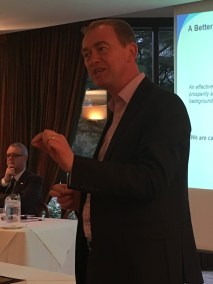
Tim Farron MP addresses school leaders and governors in Grange Over Sands

Tim Farron, MP for Westmorland and Londsdale said “It is all down to the government
deciding to spend money, or I would argue waste money in other areas such as a grammar school programme.  They have taken £1.5 billion out of the pension pot which means that schools have got to make up the difference. What the NAHT has done this week is reveal what it actually means for schools.  What it actually means for schools in Cumbria is 625 fewer teachers in just 3 years time.”

Graham Frost, NAHT Cumbria Branch Secretary said “We are having to pay for more things out of the per pupil allocations, and having to fill the gaps in services to schools arising from the £600 million reduction in the Education Maintenance Grant.  As a result, schools are already feeling the pinch.”

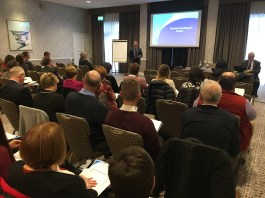
There were two meetings held in Cumbria to brief school leaders and governors on the funding crisis facing the school system and how this will affect Cumbria’s schools.  Rob Kelsall, NAHT Senior Regional Officer told the well attended meetings that:

  • by 2020 our education system will be short by £3bn;
  • 72% of school leaders nationally say that their budgets will be unsustainable by 2019 unless additional funding is allocated to schools;
  • according to National Audit Office figures, the real term budget change by 2019 for Cumbria’s school budget will be -£23,281,804, -£383 per pupil and 625 fewer teachers;
  • if £ millions for legal proceedings for universal academisation can be found, why can same or more not be invested in the classroom?
  • to avoid deficit budgets, schools are already reducing spending on staff training and equipment and are not replacing staff when they leave.

Tim Farron, MP for Westmorland and Lonsdale, who earlier in the week tabled an Early Day Motion on school funding, attended the meeting in Grange over Sands, applauding NAHT’s well reasoned analysis of National Audit Office Figures on school funding.  He said “A properly funded education system is an absolute essential at a time of economic challenge.  School leaders are one of the most trusted professions – people will listen to you!”

Attendees at both the Penrith and Grange over Sands meetings were of one mind.  School

img_4348
Rob Kelsall addresses school leaders and governors in Penrith

leaders are resourceful, do an excellent job of making the best of a difficult situation and go out of their way to mitigate the effect on pupils of the real term cuts, including the cuts to other services such as health and social care.  However, not only is this threatening the wellbeing of school workforces, the scale of the funding crisis is so stark that, without urgent additional funding to schools, in no time at all the crisis will be acutely felt across the country by pupils and their parents.

Rob Kelsall summed up the frustration felt by school leaders and governors:  “Spending on education should be seen as an investment in our children’s futures, not a burden on the treasury.”

How real terms cuts to education funding will affect schools in Cumbria

Schools in Cumbria will soon be seeing the impact of an estimated £3bn shortfall in the government’s education budget by 2020.

These are the first real terms cuts to education spending since the 1990s. The picture is extremely bleak, with 98 per cent of schools set to lose funding, at a time when costs are rising and pupil numbers are growing.

The scale of the funding crisis facing schools is so great that many MPs are becoming increasingly aware that schools in their constituencies will suffer unmanageable cuts.

Cumbria is likely to lose an average of £383 per pupil – a total of over £23 million for the county as a whole.

The impact on learning will be significant. Class sizes in primary schools could rise and some GCSE and A Level subjects could be cut from the curriculum entirely as school budgets are pushed beyond breaking point.

The government is currently pushing ahead with a new formula to calculate funding levels for schools in England. Whilst this is welcome, many voices in education believe that the £3bn real terms funding shortfall will derail this process before it even gets started.

Russell Hobby, General Secretary of the National Association of Head Teachers, said:  “School budgets are being pushed beyond breaking point. The government’s £3 billion real terms cut to education funding must be reversed or we will see education and care suffer. Already heads are being forced to cut staff, cut the curriculum and cut specialist support. A new funding formula is the right thing to do, but it cannot be truly fair unless there is enough money to go round in the first place.”

NAHT is holding a series of national events to raise awareness amongst school leaders, governors and parents. Meetings are being held in Cumbria on Thursday 9th February, to spread the word in the hope that local pressure will force the government to explain its rationale for cutting the education budget at a time when the school population is rising and costs are going up.

Tim Farron, MP for Westmorland and Lonsdale, said: “The scale of cuts facing schools across Cumbria in the next few years is vast. These cuts are not just numbers in a spreadsheet in Whitehall, they will have a real impact on our children’s futures. These cuts will mean fewer teachers, fewer resources and larger class sizes. The government must stop its ideological obsession with cuts and instead choose to invest in education to give our children the best opportunities in life. I regularly visit local schools and see the excellent work that local teachers do, but this will be at risk if the government does not provide the funding that is needed.”

Sue Hayman, MP for Workington, said: “It is shocking that Cumbria is set to lose more than £23 million in schools funding under the new national funding formula by 2019, a reduction of £383 per pupil in the county. This is a completely unacceptable situation, especially as this could potentially lead to the loss of 625 teachers in Cumbria in order to compensate for the budget cut.

“The government’s cuts to school funding will have a real impact on Cumbrian children being able to achieve their potential. It is essential that proper funding is in place for all schools, so that every pupil can receive an excellent education. Instead, schools now face their first real-terms budget cut in two decades.

“The new formula would see nearly half of English schools losing money in a process that merely moves money around the system rather than providing additional crucial investment in schools. Schools have already had to make cutbacks – in order to make further savings, many will now have to start cutting teaching staff.

 “It’s time that we had proper investment in our schools, so that they can replace crumbling buildings and give our children the high-quality education that they deserve.”

 Graham Frost, Head Teacher of Robert Ferguson Primary School in Carlisle and NAHT Cumbria Branch Secretary, said: “Some schools are already having to consider reducing staffing due to financial constraints.  This funding crisis comes at a time when the system expects schools to do even more for our children and our families as the capacity of Local Authorities is reduced.  School leaders are not only under ever-increasing pressure to achieve strong outcomes in SATs tests and exams while maintaining a full and balanced curriculum, they are increasingly being called upon to engage in aspects of social work and mental health work to meet a complex range of additional needs.   We are delighted that Tim Farron is tabling an Early Day Motion on this subject and will be attending one of our meetings on 9th February.”


School Funding Crisis

Press release on school funding:
16 January 2017
 
‘Fair funding’ must also mean sufficient funding, say education unions
Following the publication of the Government’s final proposals for its long-awaited National Funding Formula (NFF), organisations representing school staff, teachers and leaders – ATL, GMB, NAHT, NUT, UNISON and Unite – have updated the schoolcuts.org.uk website to reflect the funding losses facing each school in England.
The picture is extremely bleak.  The Government has accused funding campaigners of scaremongering, but the updated figures are worse than previously predicted.  The website, which now uses funding data published by the Department for Education, suggests that 98% of schools face a real terms reduction in funding for every pupil, with an average loss for each primary pupil of £339, and £477 for every secondary pupil.
According to the National Audit Office schools will face a real terms drop of £3 billion. This threatens the successful implementation of a new NFF which has long been the goal of many organisations in education.
While a new NFF can address disparities in funding between schools facing similar challenges, the total budget must be sufficient before there is any chance of being fair to all children.
The reassurances which Schools Minister Nick Gibb sought to give Conservative MPs, that schools would not lose money, are proven to be false.  The scale of the funding crisis facing schools is so great that MPs are becoming increasingly aware that schools in their constituencies will suffer unmanageable cuts.
Today, we publish the league table for England’s 533 Parliamentary constituencies – every one of which stands to lose out from the Government’s new funding proposals, with per pupil funding losses reaching over £1,000 in the worst hit cases.
Those affected include the four main protagonists in the school funding proposals:
Prime Minister Theresa May, the MP for Maidenhead, can expect a real terms cut of £377 for every pupil in her constituency. All bar one of her schools will face real terms cuts, in the worst case by £872 for every pupil.
Chancellor of the Exchequer Philip Hammond, MP for Runnymede and Weybridge, can also expect to see all bar one school in his constituency suffer under Government spending policies. The average cut across the constituency will be £285 for every pupil.
Education Secretary Justine Greening is MP for Putney. Every school in her constituency will experience real terms cuts, with an average loss of £655 for every pupil. The worst-hit school will see a loss of £834 for every pupil in real terms.
Nick Gibb, Schools Minister and MP for Bognor Regis and Littlehampton, will see every school in his constituency lose out. The average loss for every pupil will be £309 in real terms.
Whilst they are losing, many others are losing even more. Attached is a complete list of England constituencies and the losses anticipated for each.
Mary Bousted, General Secretary of the Association of Teachers and Lecturers, said:
“It is incredibly difficult to produce a formula that funds all schools in England fairly, but unless the Government puts more money into the overall budget all schools will struggle to make ends meet. Many parents are already being asked to pay for text books and IT and help fund-raise to pay for support for children with special educational needs and this will increase. Instead of wasting money on expanding grammar schools, the Government needs to put the money where it will make the most difference – funding existing schools adequately – otherwise a whole generation of children will have a severely restricted education.”
Tim Roache, General Secretary of the GMB union, said: “Theresa May’s Tories are running our schools into the ground, trampling over our children’s life chances, and undermining hard-working school support staff. School Cuts reveals how every single constituency in England stands to lose out from the Government’s funding proposals, putting unmanageable strain on the dedicated public servants who are trying to do the best by our kids. This is a wake-up call – we need funding for our future, not relentless and self-defeating budget cuts.”
Kevin Courtney, General Secretary of the National Union of Teachers, said: “Every single MP in England has reason to be worried about our latest analysis which shows how every constituency will be adversely affected by the Government’s recently-announced funding proposals. Schools are already on their knees trying to make ends meet. Budgets have been cut to the bone and decisions such as increasing class sizes and losing staff have already been made. To avert this national scandal, Government must reassess its plans and make substantial new funding an urgent priority so that all schools have sufficient money to run an effective education system.”
Russell Hobby, General Secretary of the National Association of Head Teachers, said:  “School budgets are being pushed beyond breaking point. The government’s £3 billion real terms cut to education funding must be reversed or we will see education and care suffer. Already heads are being forced to cut staff, cut the curriculum and cut specialist support. A new funding formula is the right thing to do, but it cannot be truly fair unless there is enough money to go round in the first place.”
Dave Prentis, General Secretary of UNISON, said: “Cash-strapped schools are struggling to give children a decent education. The funding crisis means overcrowded classrooms, support staff not being replaced and parents having to pay towards the cost of lessons. Children, parents and staff deserve so much better.”
Len McCluskey, General Secretary of Unite, said: “Schools and school support staff must have proper investment to deliver good education outcomes for all children.  We call on Government to stop the cuts and fully fund our schools and education services”

KS2 SATs 2016

What Cumbrian heads have been saying about KS2 SATs


Issues with Accessibility

One of the key issues with this year’s KS2 SATs is the way the tests restrict teachers from using professional judgement – all pupils had to face the same test papers, regardless of their stage of learning progress.  In addition to remarks about the expectations (equivalent to Year 7/8/9, secondary school content) presenting difficulties for many pupils, several headteachers commented on the style, subject matter and vocabulary of the content, which may have proven challenging for some pupils.  It is likely that those designing the tests may (inadvertently or deliberately) project their own cultural background and life experiences into test materials, which has the potential to unfairly disadvantage children with different cultural background and experience.  My favourite comment of the week appertained to a specific test question:

Are they buying the strawberries from Fortnum and Masons?

To what extent SATs test speed/accuracy…

On the subject of access arrangements, for which schools can apply in cases of specific learning difficulties such as dyslexia, one headteacher made the following observation:

For the first time we had to choose between use of a reader and extra time. Previously use of a reader and extra time could both be used and in my opinion it is appropriate when a reader is used for 25% extra time to also be allowed since it often takes longer to get through the test when a reader is used than when a good reader is reading for his/herself. I had to choose which would be fairer to the pupil – reader or 25% extra time so we chose a reader where this was possible – but he didn’t complete the papers and probably could have done with a few more minutes.

Test design and administration rules dictate the extent to which the test measures speed or accuracy/fulness of understanding, or both.  A concern of many headteachers is that poor test design (including administration rules) puts pupils who need a little longer to process and understand the questions under duress.  Several headteachers reported stories of pupils who had made significant progress during their time at primary schools branding themselves failures, despite headteachers and teachers encouraging them at every turn and not over-playing the importance of the tests.  Many headteachers reported pupils struggling to get through the test papers in the given time, and therefore a great many may not have been able to demonstrate accurate understanding and good learning.

One headteacher reported an incident in which a pupil commented that she was ‘rubbish’ when the test was concluded (albeit unfinished).

How demoralising for that child and for the TA who has worked with her every day. When I looked around at some of the other children, they had also left big gaps. Such a shame! The easier text was at the back, but some didn’t even get there.

The extent to which the SATs tested speed seems to have been out of proportion with the extent to which they tested accuracy.  Some industries require quick thinking, fast work, it is true.  However, great minds often require time to consider, ponder, explore in order to produce great ideas.  Not only are we being made to value only the easily measurable, we are restricted in how much time we afford pupils to show us what they know within that narrow portion of the curriculum.

To Conclude…

In the worst cases, there were several reports of physical manifestations of anxiety (tears and vomiting) during tests.  This headteacher sums up how many feel about this year’s SATs:

Ultimately, I think that the New curriculum has raised standards, but at what costs?
None of our children have burst into tears, but I have had concerned parents coming into school, saying that their child is stressed and worried and not been sleeping!
Our message to our children is that you just do your best!
What children are expected to know is ridiculous, and we are robbing them of childhood. As HT we just need to ensure that the curriculum remains balanced and broad and we ensure that we keep all of those exciting experiences going for the children that we educate.


Cumbrian Heads at National Conference 2016

This slideshow requires JavaScript.

Representing Cumbrian School Leaders at NAHT National Conference 2016 were:  Mick Brookes (Branch Treasurer), Clem Coady, Maggie Cole (Branch President), Graham Frost (Branch Secretary), Tim Glendinning (National Executive Member) and Tanya Hughes.

At the conference, Cumbria Branch proposed that key, guiding principles of school leaders be agreed and published, then applied rigorously to all future policy announcements by the government.  The wording of our motion was as follows:

The coercion and prescription permeating down through the school system in England, from DFE through to the classroom, is damaging the education of our young people, causing a recruitment crisis and contributing to mental ill-health at every level.

We call upon National Executive, to coordinate a national campaign to establish a set of key principles by which all national policy changes will be measured, with findings communicated to the general public.

In my speech to conference, I suggested the following principles be included:

  • minimum requirements to ensure policies are research-informed;
  • minimum requirements for meaningful consultation with practitioners and other stakeholders;
  • impact on pupil health and well-being a key measurement of every policy;
  • appropriate and achievable time allocation for implementing changes.

Our motion to conference received almost unanimous approval and entered NAHT policy.

The conference agenda rightly focused on the two main issues that concern us today:

– the complete fiasco over this year’s round of testing;
– outrage over the announcement of forced academisation.

On the first issue our General Secretary, Russell Hobby declared “We will not put up with this for a further year.”  Read Russell’s speech.

On the second issue, Conference voted almost unanimously in favour of action, up to and including industrial action if necessary, should the DfE continue with their forced academisation plans. This is particularly important for Cumbria as small schools (60% of us) will not be allowed to be stand alone academies and once absorbed into a MAT will legally cease to exist as independent schools.

On 6th May, the announcement by the DFE stated that good and outstanding schools will not be forced, coming less than a week after our conference, is a positive step.  However, the DFE still expects all schools to become academies in due course.  There is still campaigning required on this issue, to prevent any schools having their future structure decided against the will of pupils, parents, governors, staff and school community.

A third issue is that of the looming ‘Fair Funding’ announcement that may have far reaching consequences for small schools if the support grant is reduced.

NAHT Cumbria Branch encourages members to take the following actions:

1. Sign the Assessment Pledge  that you will find on the NAHT website (you’ll need your membership number – contact me if you need this).

IMG_1043
Russell Hobby, NAHT General Secretary, will be speaking to school leaders in Cumbria on 17th May.

2. Come to the Cumbria NAHT Conference in Penrith on Tuesday 17th May at 12.30pm.
– It is free.
– We’ll give you a buffet lunch.
– Our general Secretary: Russell Hobby will address us and give you your opportunity to help shape NAHT policy.
– Booking a place is easy – just email me.

Remember – without you we fail.
“The world is changed by those who turn up.”

Graham Frost
NAHT – Cumbria Branch Secretary